In an era increasingly defined by the escalating threats of environmental degradation, climate change, and the unsustainable depletion of natural resources, the paradigm of sustainable development has transitioned from a theoretical aspiration to a global imperative. The international community has formally acknowledged this urgency through the adoption of landmark agreements, most notably the United Nations’ 2030 Agenda for Sustainable Development and the Paris Agreement on Climate Change. These frameworks collectively underscore the necessity of harmonizing economic advancement with social equity and robust environmental stewardship. However, the transition to a sustainable global economy is capital-intensive, requiring massive investments in climate-resilient infrastructure, renewable energy, and innovative technologies. It is within this critical financing gap that green finance has emerged as a transformative force. Among its various instruments, green bonds have gained prominence as a pivotal mechanism for mobilizing the large-scale private capital necessary to fund projects that align with environmental sustainability goals.
……
Nevertheless, a significant disconnect exists between Vietnam’s high-level policy ambitions and the on-the-ground reality of its financial markets. The country’s green bond market remains notably underdeveloped, especially when compared to regional peers such as Malaysia and Singapore. This discrepancy suggests the presence of deep-rooted structural, regulatory, and market-based impediments.
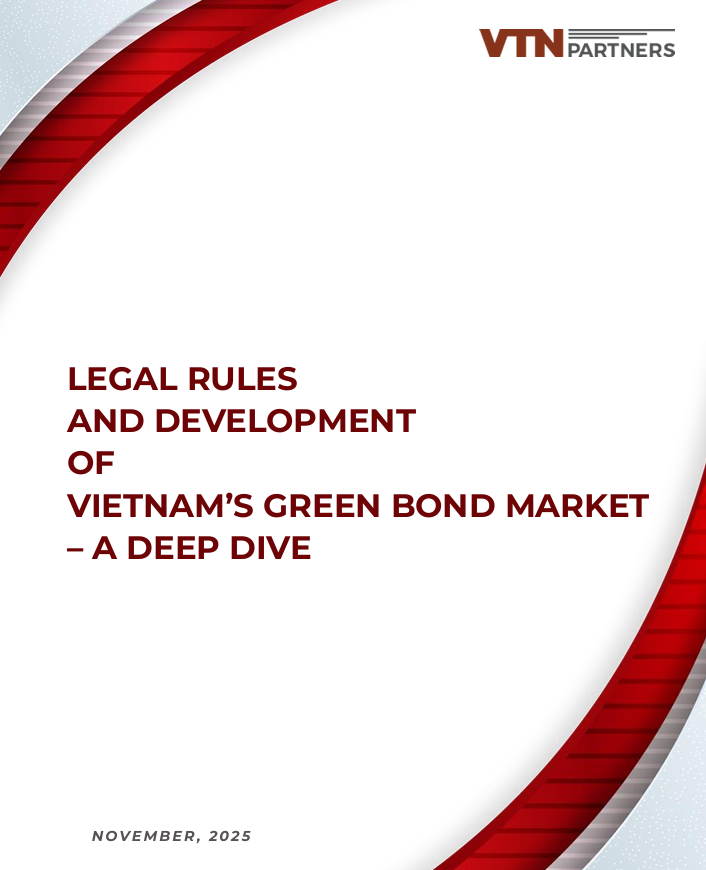
Therefore, this document aims to explore the legal regulations and development of Vietnam’s green bond market.
Please check out the document below for the detailed analysis.
2511 Green Bond Market Development and Legal Framework
greenbond Vietnam legal framework debtcapitalmarkets lawyers